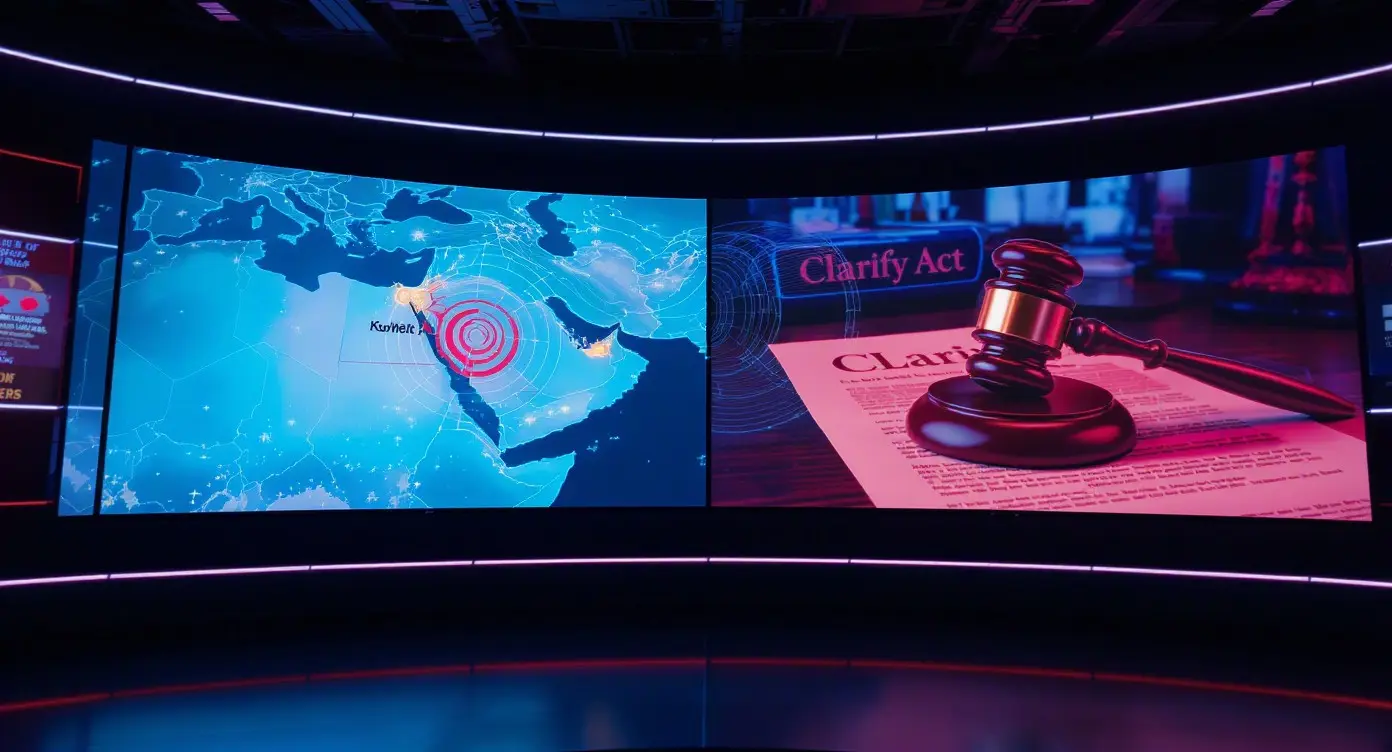
Geopolitical instability has emerged as the primary driver of market volatility, as a missile interception in Kuwait triggered a swift $700 million liquidation event across digital asset markets. This sudden risk-off move highlights how sensitive crypto liquidity has become to Middle East tensions, often moving faster than traditional equities during weekend hours. While the technical damage is immediate, the institutional landscape continues to shift as U.S. Senator Cynthia Lummis prepares to push the Clarity Act—a landmark stablecoin bill—through the Senate for a floor vote.
The Clarity Act is particularly significant because it aims to provide a federal framework for stablecoin issuers, potentially ending years of regulatory ambiguity in the United States. If passed, it would offer a compliant path for banks and tech companies to integrate dollar-pegged assets into the mainstream financial system, providing a safer environment for institutional capital. Simultaneously, a New York court has paused a staggering $235 billion lawsuit involving claims over 39,000 dormant Bitcoin wallets. While the legal proceedings are delayed until July, the case underscores the lingering uncertainty surrounding Satoshi-era coins and the potential for massive, unexpected supply to hit the market if ownership is ever successfully challenged.
For most participants, these developments represent a mix of immediate downside risk from geopolitics and long-term risk reduction through legislative progress. The $700 million liquidation serves as a stark warning to high-leverage traders that global events can wipe out positions in minutes. Meanwhile, the progress of the Clarity Act is a clear upside signal for those looking for institutional-grade stability. Long-term holders should focus on the regulatory milestones in Washington, while short-term traders must keep a close eye on geopolitical headlines that could trigger further flash crashes.