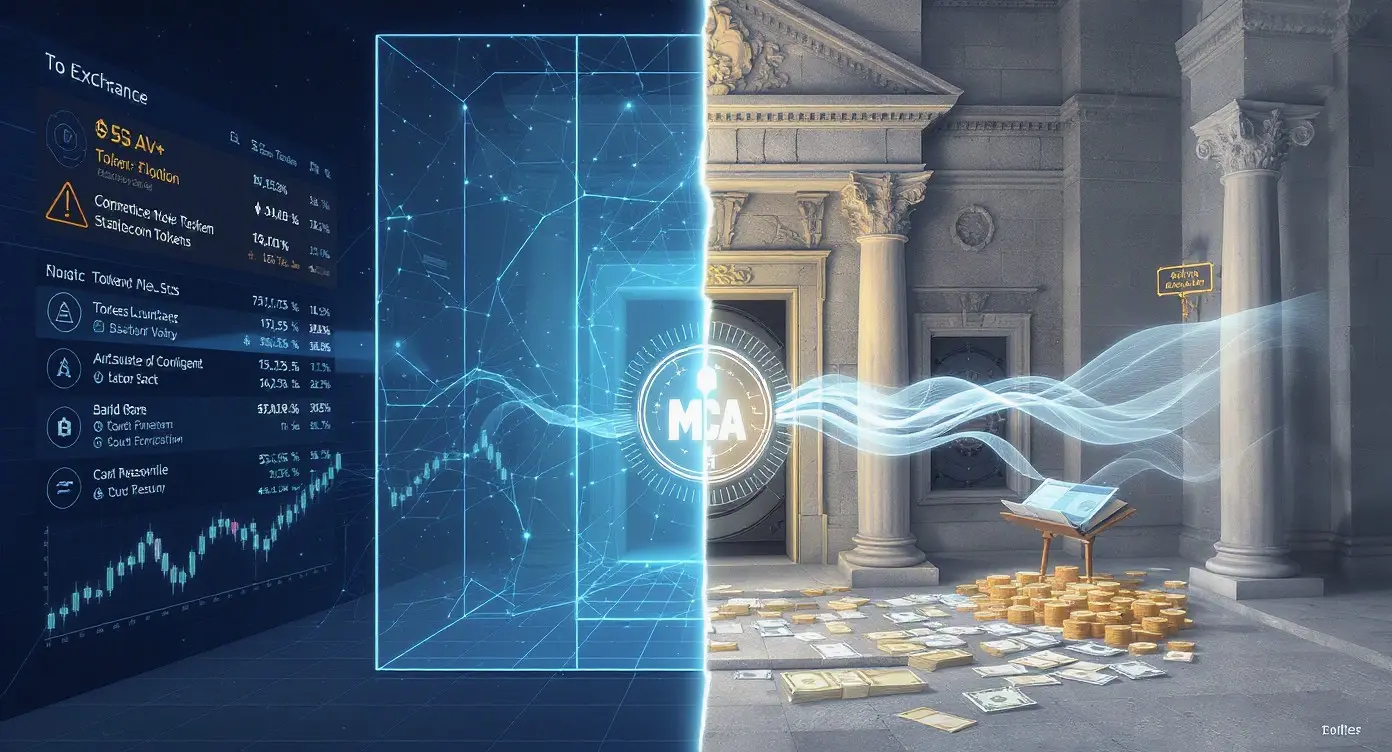
The global stablecoin market is undergoing a dramatic structural shift as European regulatory deadlines force major exchanges to restrict the world's largest stablecoin, USDT, while Wall Street giant Fidelity moves to capture the lucrative business of managing stablecoin reserves. These dual developments signal a transition from unregulated dominance to institutional, compliant cash management.
With the European Union’s Markets in Crypto-Assets (MiCA) stablecoin rules taking full effect on July 1, top exchanges including Binance, Coinbase, and Kraken have begun restricting Tether’s USDT for European users. Because USDT does not currently meet MiCA's strict licensing requirements for e-money issuers, exchanges are preemptively limiting its use to avoid regulatory penalties. This is a massive shift for European retail and institutional traders who rely on USDT as their primary liquidity pair, forcing a rapid rotation into MiCA-compliant alternatives like Circle’s EURC or USDC.
Meanwhile, traditional finance is racing to institutionalize the back-end of the stablecoin market. Fidelity Investments has joined the race to manage the multi-billion-dollar reserves that back stablecoins. As stablecoin issuers hold massive portfolios of U.S. Treasury bills and cash equivalents, traditional asset managers see a highly lucrative opportunity to manage these yield-bearing reserves. Fidelity's entry intensifies competition with rivals like BlackRock, which already manages reserves for Circle, cementing stablecoins as a core pillar of mainstream financial plumbing.
For ordinary participants, these moves represent a significant reduction in systemic risk at the cost of short-term liquidity fragmentation. European users must prepare for a non-USDT trading environment, while global investors should view Fidelity's entry as a strong validation of stablecoins as permanent financial infrastructure. This is an undeniable upside for the long-term maturity of digital assets, even as short-term regulatory friction disrupts European trading desks.