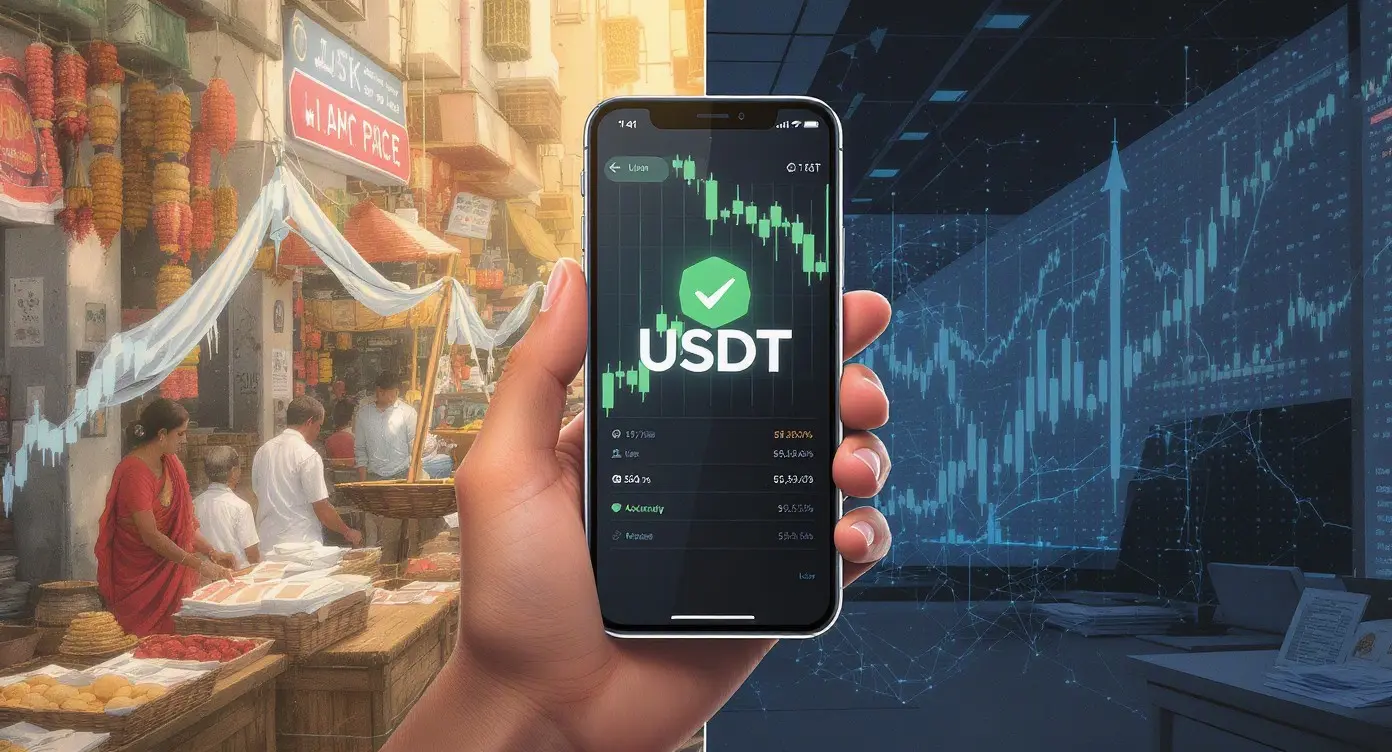
A severe crackdown on crypto remittances and on-ramps in India has led to a dramatic surge in the price of stablecoins, with USDT currently trading at an over 8.5% premium. This significant market distortion means Indian users are paying substantially more to acquire U.S. dollar-pegged stablecoins, highlighting the immediate and practical impact of regulatory actions on digital asset accessibility and cost in major global markets.
This premium jump is a direct consequence of intensified enforcement efforts by Indian authorities, which have disrupted traditional channels for converting local currency into crypto. These actions have effectively squeezed the supply of stablecoins available within the country's domestic ecosystem, creating scarcity and driving up prices. For ordinary users, this translates into higher costs for participating in the crypto economy, whether for trading, investing, or sending remittances.
Separately, BlackRock's spot Bitcoin ETF (IBIT) has solidified its market dominance, now leading all rivals with approximately $45 billion in assets under management (AUM). This figure triples the AUM of its nearest competitor, Fidelity. While the broader market has seen institutional outflows from Bitcoin ETFs recently, BlackRock's sustained growth underscores a significant concentration of institutional capital flowing into the most established and trusted providers, indicating a flight to quality among large investors.
This combination of news highlights both the friction and opportunity in the global digital asset landscape. The Indian premium demonstrates real-world regulatory risk and its direct impact on user costs and market efficiency. Simultaneously, BlackRock's ETF leadership signals continued institutional confidence and consolidation within the regulated investment product space. Market participants should note the increasing segmentation: growing challenges in certain retail markets versus strong, concentrated institutional adoption in regulated products.