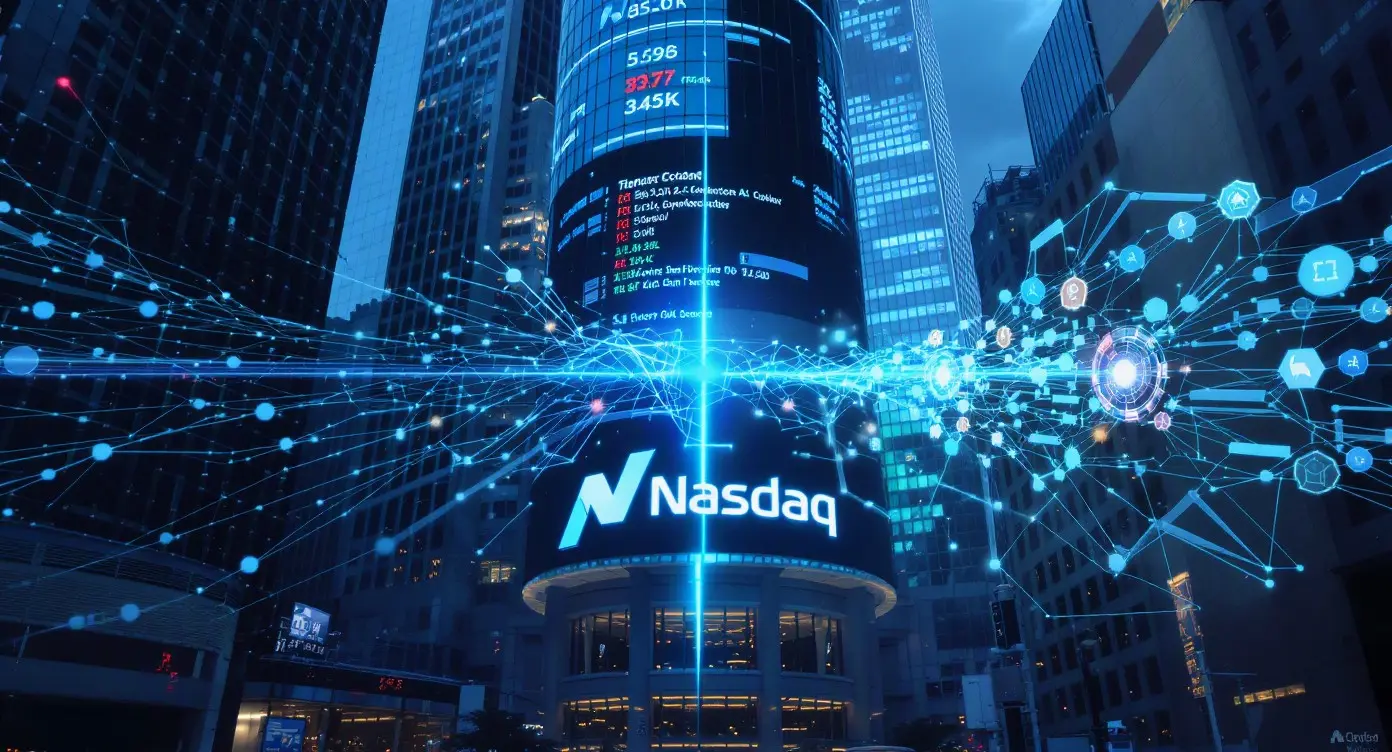
The U.S. Securities and Exchange Commission (SEC) has approved a landmark Nasdaq pilot program that will allow tokenized stocks to be traded directly alongside traditional shares. This is a pivotal moment for digital assets, signaling a serious push by major financial institutions to integrate blockchain technology into the core of traditional capital markets. It moves tokenization from a theoretical concept to a practical, regulated reality within one of the world's largest stock exchanges, opening the door for a new era of efficiency and liquidity for various asset classes.
This SEC-approved pilot means that investors could soon access tokenized versions of real-world assets like equities through the familiar infrastructure of a regulated stock exchange. For market participants, this offers the potential for faster settlement, fractional ownership, and 24/7 trading, fundamentally reshaping how assets are issued, traded, and owned. Builders and curious beginners should recognize this as a critical step in bridging Web3 innovation with mainstream finance, expanding the addressable market for digital assets beyond pure cryptocurrencies.
Meanwhile, fresh reports from the Washington Examiner allege that former President Donald Trump acquired shares in crypto companies *after* his SEC dropped enforcement cases against them, raising significant conflict of interest concerns. This development highlights the persistent political risks and potential for regulatory capture within the digital asset space. Such allegations can fuel public skepticism, complicate future regulatory clarity, and impact market sentiment by drawing renewed scrutiny to the integrity of enforcement actions.
Overall, the Nasdaq pilot represents a major upside for the long-term institutional adoption and market integration of digital assets, promising a more efficient and accessible financial future. However, the allegations surrounding Trump's crypto dealings introduce a clear downside risk, reminding market participants that political influence and ethical concerns continue to be a volatile factor in the regulatory landscape. Both developments underscore the ongoing maturation of the industry, where technological advancement meets increasing political and regulatory scrutiny.