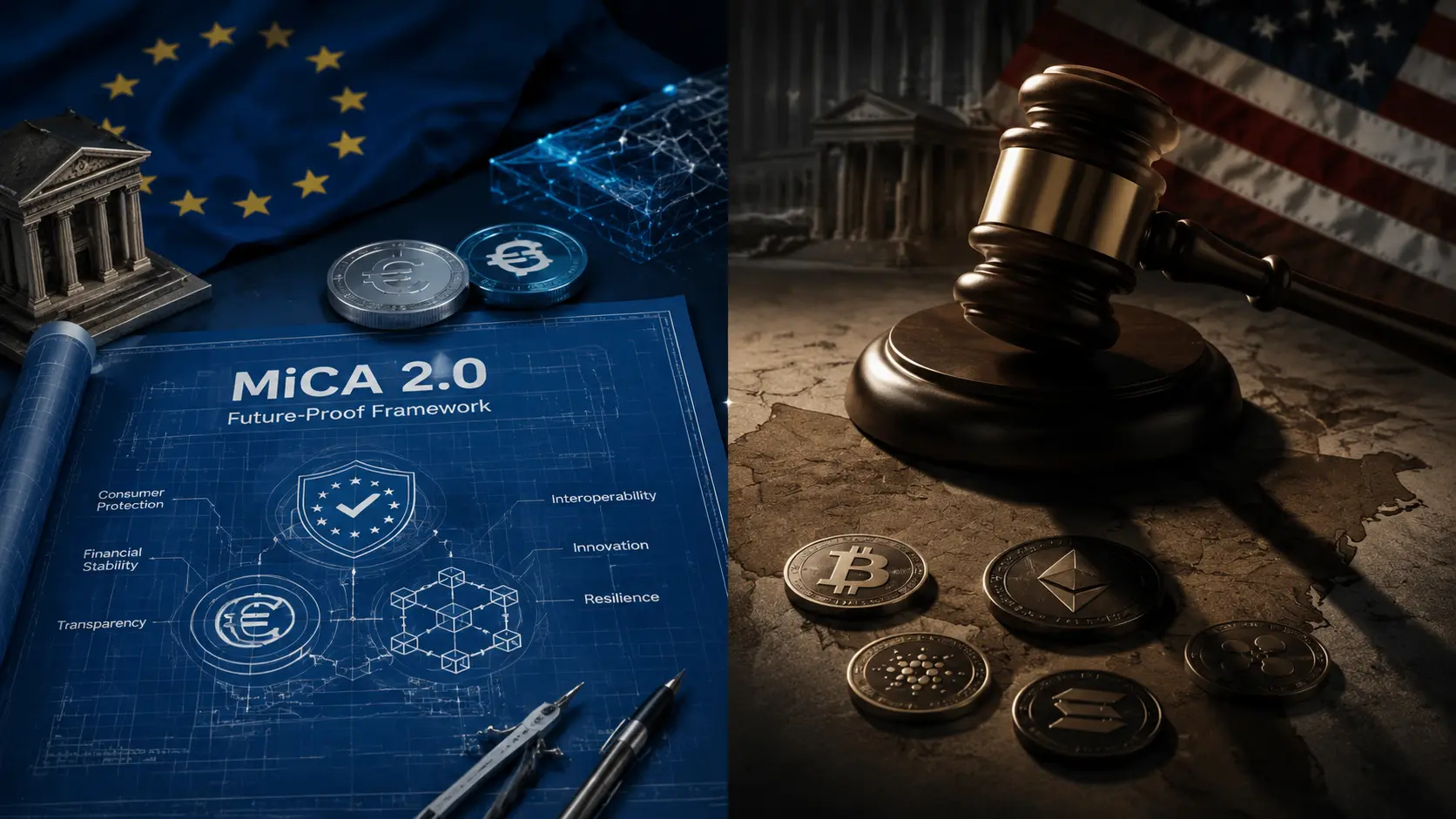
The European Union is actively evolving its landmark Markets in Crypto-Assets (MiCA) regulation, preparing a "MiCA 2.0" framework to address global stablecoins and the growing trend of tokenized finance. This proactive step signals Europe's commitment to creating a comprehensive and adaptable regulatory environment. Simultaneously, the European Securities and Markets Authority (ESMA) has launched a sweeping review of crypto custody practices following MiCA's initial implementation, aiming to enhance security and investor protection within the digital asset ecosystem. These moves provide clarity and structural improvements, offering upside for market participants seeking regulatory certainty and robust infrastructure in Europe.
The planned "MiCA 2.0" framework is specifically designed to extend regulatory oversight to foreign stablecoin issuers and integrate tokenized traditional financial assets into the legal framework. This is crucial for bridging conventional finance with Web3, as it establishes clear rules for real-world assets (RWAs) on blockchain and ensures that stablecoins from outside the Eurozone operate under consistent standards within the EU. For builders and institutions focused on asset tokenization, this means a clearer roadmap for compliant product development and market entry.
Across the Atlantic, a recent U.S. Supreme Court ruling that expands the President's authority over federal agencies could significantly influence the Securities and Exchange Commission (SEC) and Commodity Futures Trading Commission (CFTC)'s ability to issue new crypto regulations. This ruling, while not directly about crypto, could either empower or constrain these agencies, potentially adding another layer of complexity and uncertainty to the already fragmented U.S. digital asset policy landscape. Market participants should watch how this judicial development impacts the ongoing legislative efforts and agency rulemaking, as it could reshape the power dynamics in U.S. crypto governance.
Overall, Europe is moving towards a more mature and refined regulatory structure for digital assets, particularly in stablecoins and tokenization, which is a clear upside for market participants seeking a predictable environment. In contrast, the U.S. faces new legal complexities that could introduce further friction into its regulatory process, posing potential risks for firms operating within its jurisdiction.