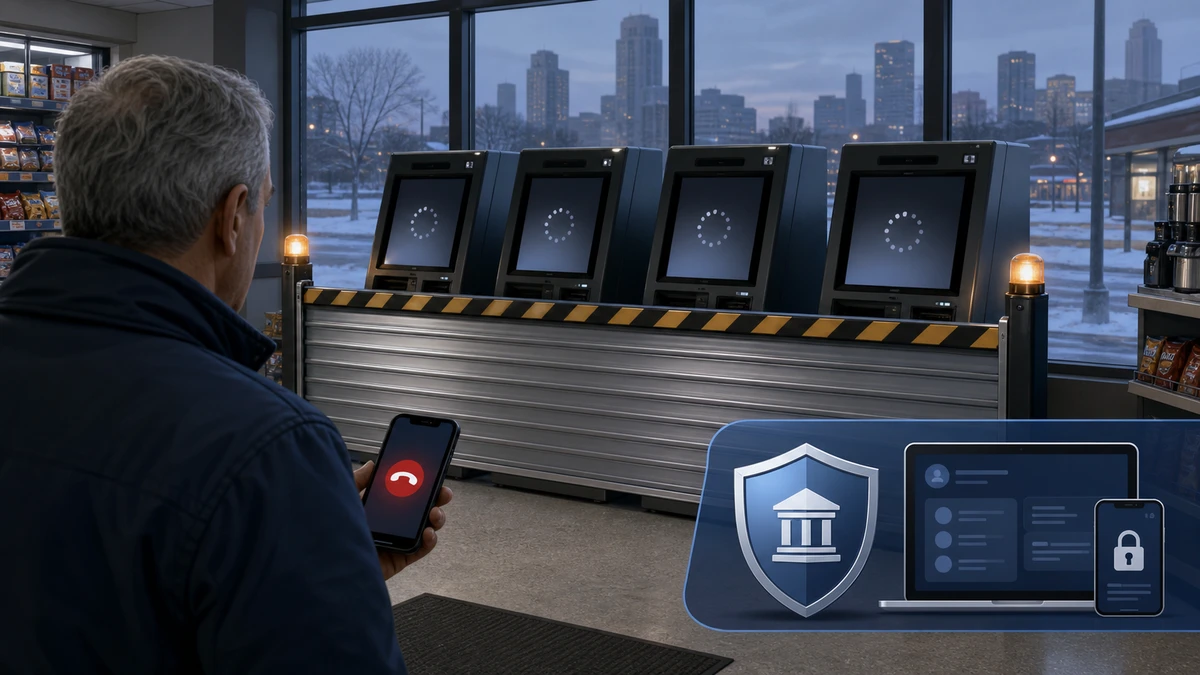
Minnesota has begun a statewide ban on crypto ATMs and kiosks, removing a cash-to-crypto route that state officials say was repeatedly used to steal from residents. The rule matters less for active traders than for ordinary people: these machines make it quick to turn cash into crypto, but that same speed and irreversibility have made them a favorite payment tool for scammers.
The state says it recorded 134 complaints tied to kiosk scams from 2023 through 2025, with nearly $1 million in reported losses. In a common setup, a criminal impersonates a government agency, a bank, or an investment promoter and pressures a victim to feed cash into a kiosk. Once the crypto is sent, recovery is often difficult. Minnesota’s law prohibits operating or making kiosks available from August 1 and requires kiosk-only operators to pay out customer funds or crypto they still hold by year-end. [Minnesota law](https://www.revisor.mn.gov/laws/2026/0/65/laws.0.3.0) [Minnesota Department of Commerce](https://mn.gov/commerce/news/?id=17-749033)
For kiosk operators, including firms that relied on convenience-store and retail placements, this is a direct business hit. For the wider market, it is a warning that regulators are increasingly separating regulated crypto access from high-fee, fraud-prone onramps. A state ban does not change Bitcoin’s network or prevent legitimate users from buying crypto through exchanges, banks, or other compliant services.
This is downside for the crypto-ATM business and risk reduction for consumers, not a broad verdict on crypto adoption. Beginners, older users, and anyone asked to pay an unexpected bill with crypto should care most.