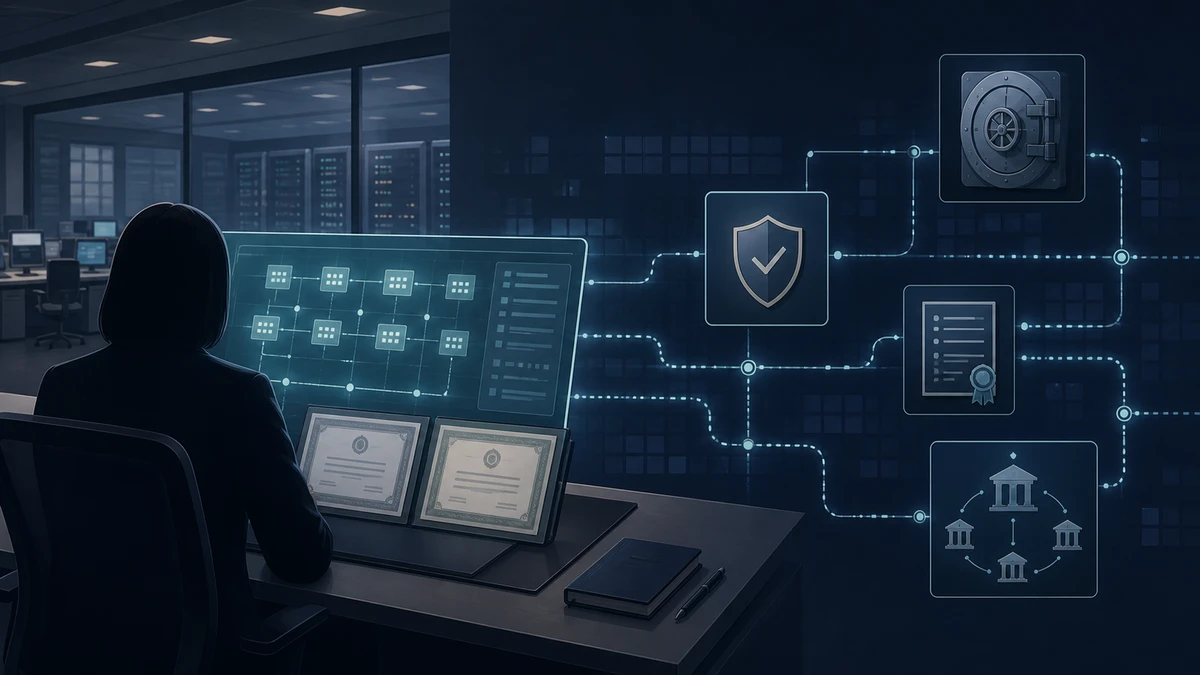
The SEC has proposed modernizing the rules for registered transfer agents—the firms that keep official ownership records and help process share transfers. The headline is not that tokenized stocks are suddenly approved for everyday trading. It is that the regulator is starting to update the market plumbing needed for blockchain-based securities to operate inside the U.S. system with clearer safeguards.
Transfer-agent rules have not been substantively updated since the late 1970s and early 1980s. The SEC says its proposal reflects electronic recordkeeping, communications and blockchain technology used in securities offerings and share transfers. It would amend existing rules and forms, add two new rules, and remove one existing rule.
That matters because tokenization only becomes commercially useful when ownership records, transfers, corporate actions and investor protections work reliably. A token representing a Treasury fund share or listed stock is not much use if the legal record of who owns it is unclear, the system fails during a transfer, or a cyberattack can corrupt records. The proposal explicitly puts blockchain data integrity, security and operational resilience closer to the center of the conversation.
For issuers, fund managers, custodians and transfer-agent providers, this is a practical signal to prepare systems and compliance processes for more on-chain activity. For ordinary crypto users, it is a positive market-structure development, but not a trading catalyst and not a guarantee that every tokenized asset will be safe or liquid. The SEC will take public comments for 60 days after Federal Register publication.
This looks like gradual risk reduction and a real step toward regulated tokenization. Builders and institutions should care most; holders should watch for actual products and final rules rather than chase the headline.